Partners & Distributors
 Support
 Our References
 Our Company
 Contact us

+385 (1) 35 35 200Mon-Fr 9a.m.-6p.m.
How Drones Are Transforming Security Threats in the 21st Century
Drones have moved beyond military use to become widely accessible technologies that are reshaping modern security risks. Unmanned aerial systems challenge traditional protection models, introduce new aerial threat vectors, and redefine how low-altitude airspace must be protected in the 21st century.
How Drones Are Reshaping Modern Security Risks
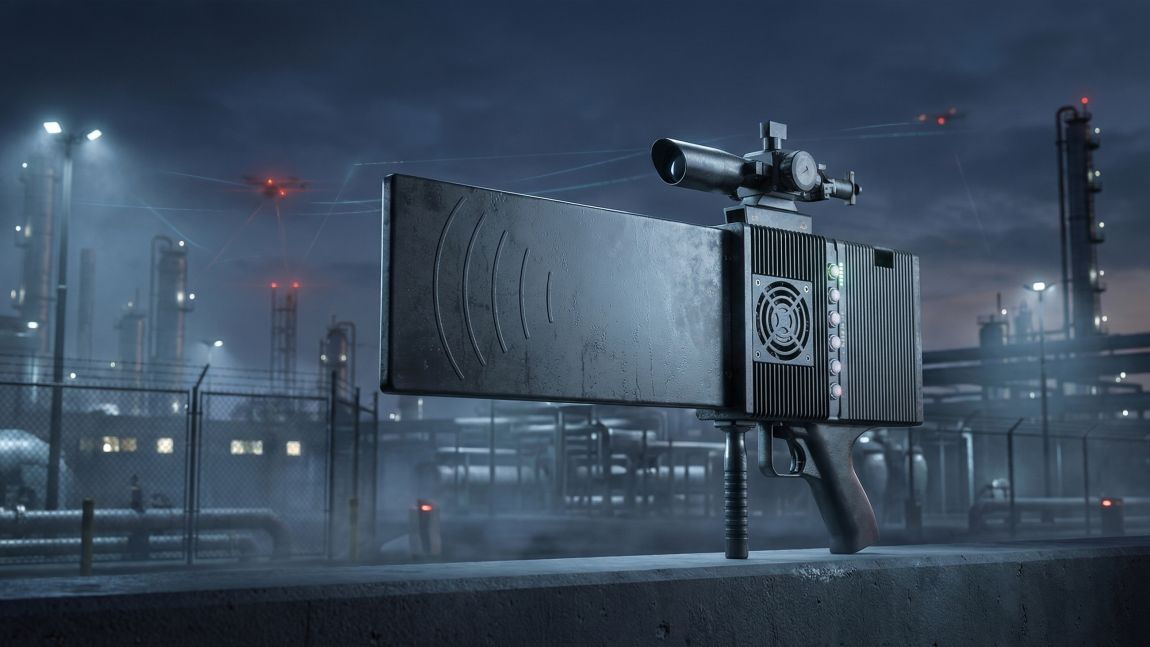
In little more than a decade, drones have evolved from niche military tools into widely accessible technologies used by hobbyists, businesses, and governments alike. This rapid democratization has brought enormous benefits—from aerial photography and infrastructure inspection to logistics and emergency response. However, it has also introduced a new and complex category of security threats that traditional protection systems were never designed to handle.
In the 21st century, the airspace just above our heads has become a new frontier of risk.
From Ground-Based Threats to the Third Dimension
For decades, security strategies focused primarily on ground-level risks. Physical barriers, access control, patrols, and surveillance cameras formed the backbone of perimeter protection. These measures remain important, but drones fundamentally bypass them by introducing a vertical threat vector.
A small, commercially available drone can cross fences, walls, and restricted zones in seconds—often silently and without detection. This shift forces security professionals to rethink what “perimeter” really means in a world where threats can approach from above, hover in place, or disappear just as quickly as they arrive.
Accessibility Has Changed the Risk Landscape
One of the most significant changes is accessibility. High-quality drones equipped with GPS, high-resolution cameras, thermal sensors, and long-range communication links are no longer exclusive to military forces. They are affordable, easy to operate, and widely available.
This means that sophisticated capabilities—once requiring state-level resources—can now be leveraged by criminals, hostile actors, or simply irresponsible users. Surveillance, reconnaissance, and payload delivery are no longer theoretical risks; they are documented realities across civilian, industrial, and governmental environments.
New Types of Security Threats
Drones introduce a range of threats that differ fundamentally from conventional risks:
Unauthorized surveillance
Drones can capture images, video, and thermal data from angles that evade traditional cameras. Sensitive facilities, private properties, and critical infrastructure can be monitored remotely without physical intrusion.
Contraband delivery
Correctional facilities, borders, and secured compounds increasingly face drone-based delivery of prohibited items, bypassing guards and checkpoints entirely.
Disruption of operations
Even unarmed drones can cause serious disruption. Airports, ports, industrial plants, and public events have experienced shutdowns due to drone incursions, resulting in financial losses and safety concerns.
Signal and data interference
Drones may be used as platforms for signal interception, spoofing, or communication disruption, posing risks to navigation systems and wireless infrastructure.
Weaponization and hostile use
Perhaps the most serious concern is the adaptation of drones for malicious purposes. While not every threat is violent, the low barrier to entry raises serious questions about preparedness and response.
Why Traditional Security Measures Fall Short
Conventional security tools were not designed to detect or neutralize small, fast-moving aerial objects. Cameras may not cover the sky effectively. Radar systems built for aircraft often fail to detect low-altitude drones. Physical barriers are irrelevant against airborne intrusion.
As a result, many organizations discover that they are effectively blind to drone activity until it is too late. Detection without response is insufficient, and response without precise detection is unreliable. The challenge lies in closing this gap.
The Rise of Counter-Drone Technologies
To address these challenges, counter-drone technologies have emerged as a critical component of modern security strategies. These systems focus on three core capabilities:
Detection and identification
Using a combination of radio-frequency analysis, radar, optical sensors, and signal intelligence, modern systems can detect drones early and distinguish them from birds or other objects.
Threat assessment
Not every drone poses the same level of risk. Advanced systems analyze flight behavior, signal patterns, and intent indicators to assess whether an incursion is accidental, negligent, or hostile.
Controlled mitigation
Rather than relying on destructive measures, many counter-drone solutions focus on signal disruption, navigation interference, or communication denial—forcing drones to land, return to their operator, or lose control without collateral damage.
Security Beyond the Military Context
While counter-drone technology is often associated with defense and military use, its relevance extends far beyond that domain. Civil aviation authorities, energy providers, industrial facilities, logistics hubs, event organizers, and private security operators all face drone-related risks.
As regulations evolve and airspace becomes more crowded, the ability to monitor and control low-altitude threats is becoming a standard requirement rather than a specialized capability.
A Shift in Security Mindset
Perhaps the most profound impact of drones is not technological, but conceptual. Security is no longer static or purely physical. It is dynamic, signal-based, and increasingly software-driven. Effective protection now requires situational awareness across multiple layers: physical space, electromagnetic spectrum, and digital communication.
Organizations that adapt to this reality gain a strategic advantage—not only in threat prevention, but in operational resilience and decision-making speed.
Looking Ahead
Drones are not a temporary challenge; they are a permanent feature of the modern environment. As autonomy, AI-assisted navigation, and swarm capabilities continue to develop, security threats will grow more complex, not less.
Addressing these risks requires more than reactive measures. It demands foresight, integrated systems, and a clear understanding of how technology reshapes both opportunity and vulnerability.
In the 21st century, security is no longer just about controlling access to the ground. It is about mastering the airspace above it.