Partners & Distributors
 Support
 Our References
 Our Company
 Contact us

+385 (1) 35 35 200Mon-Fr 9a.m.-6p.m.
Navigation, Spoofing & Signal Control: Mastering the Invisible Battlefield
Navigation, spoofing, and signal control have become critical tools in modern security as unmanned systems increasingly depend on electronic signals. These technologies enable precise, non-destructive control of aerial threats by manipulating navigation and communication without physical engagement.
Navigation, Spoofing, and Signal Control in Modern Security
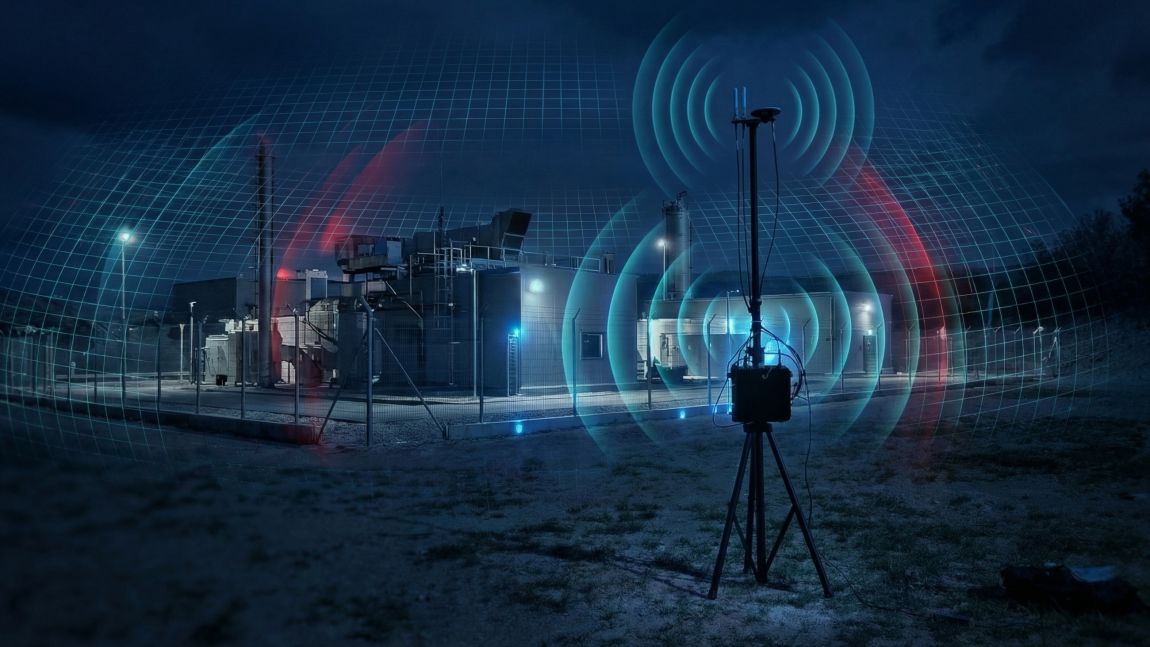
Modern security threats are no longer defined solely by physical presence. In an increasingly connected world, control over signals, data, and navigation systems has become just as critical as control over territory. Drones, autonomous systems, and wireless platforms depend entirely on electronic signals to function—making navigation, spoofing, and signal control central pillars of contemporary security strategy.
This invisible layer of the battlefield, often overlooked by traditional protection models, is where modern conflicts and security challenges are increasingly decided.
Navigation as a Single Point of Failure
Most unmanned aerial systems rely heavily on satellite-based navigation such as GNSS and GPS. These signals provide positioning, timing, route planning, and stabilization. Without them, even the most advanced drone becomes unreliable or unusable.
This dependency creates a critical vulnerability. Unlike physical systems, navigation signals are weak, predictable, and accessible across vast areas. They can be disrupted, manipulated, or overridden without direct contact—making navigation one of the most effective leverage points in countering unmanned threats.
Beyond Jamming: Understanding Spoofing
While jamming disrupts signals by overwhelming them with interference, spoofing takes a more subtle and strategic approach. Instead of denying navigation data, spoofing replaces it with false information.
A spoofed drone may believe it is flying on a correct trajectory while being silently redirected, delayed, or disoriented. This allows defenders to neutralize threats without triggering obvious fail-safes or alerting operators immediately.
Spoofing is particularly effective in environments where destructive countermeasures are not acceptable—such as urban areas, critical infrastructure sites, or civilian airspace.
Signal Control as a Strategic Capability
Signal control goes beyond navigation alone. Drones and unmanned systems rely on multiple electronic layers: command and control links, telemetry, video transmission, and sensor data streams. Each represents an opportunity for intervention.
By monitoring, analyzing, and selectively interfering with these signals, security systems gain the ability to shape the operational behavior of aerial threats. This approach transforms defense from reactive interception into proactive control.
Rather than asking how to stop a drone, modern signal control strategies focus on how to limit what the drone can perceive, where it can go, and how it can respond.
Precision Over Destruction
One of the defining advantages of navigation spoofing and signal control is precision. Unlike kinetic solutions or broad-spectrum interference, these techniques allow highly targeted responses.
Signals can be manipulated within defined geographic zones, specific frequency ranges, or narrow time windows. This minimizes unintended impact on surrounding infrastructure, friendly systems, and civilian communications.
For security operators, this precision translates into greater flexibility, legal compliance, and operational confidence—especially in complex environments where multiple systems coexist.
Applications Across Security Domains
Navigation and signal control technologies are no longer confined to military doctrine. Their relevance spans a wide range of sectors:
- Critical infrastructure protection, where drones may be used for surveillance or disruption
- Aviation and transportation, where unauthorized navigation interference poses safety risks
- Border and perimeter security, where silent control is preferable to visible engagement
- High-risk events, where discreet mitigation avoids panic or escalation
In each case, the ability to influence unmanned systems without physical confrontation is a decisive advantage.
The Role of Intelligence and Situational Awareness
Effective spoofing and signal control depend on deep situational awareness. Systems must first detect and analyze the electronic environment—identifying active frequencies, protocols, and behavioral patterns.
Only then can signals be manipulated in a controlled and predictable manner. This intelligence-driven approach distinguishes advanced signal control systems from simplistic interference tools.
As unmanned systems adopt encrypted links, adaptive navigation, and autonomous behaviors, the importance of real-time signal intelligence will continue to grow.
Ethical, Legal, and Operational Considerations
Because navigation and signal control operate invisibly, they raise important questions around legality, accountability, and rules of engagement. Modern systems are therefore designed with strict control mechanisms, logging, and operator oversight.
Used responsibly, these technologies provide a measured and proportional response to aerial threats—aligning security objectives with regulatory and ethical frameworks.
Looking Ahead
As drones evolve toward greater autonomy, reduced operator dependence, and swarm coordination, navigation and signal control will remain central to effective defense. Even autonomous systems must orient themselves in space, synchronize timing, and exchange data.
The future of security will not be defined by who has the largest physical force, but by who understands and controls the electromagnetic environment most effectively.
Navigation, spoofing, and signal control represent more than technical tools—they are strategic capabilities shaping how modern airspace is protected, managed, and defended.