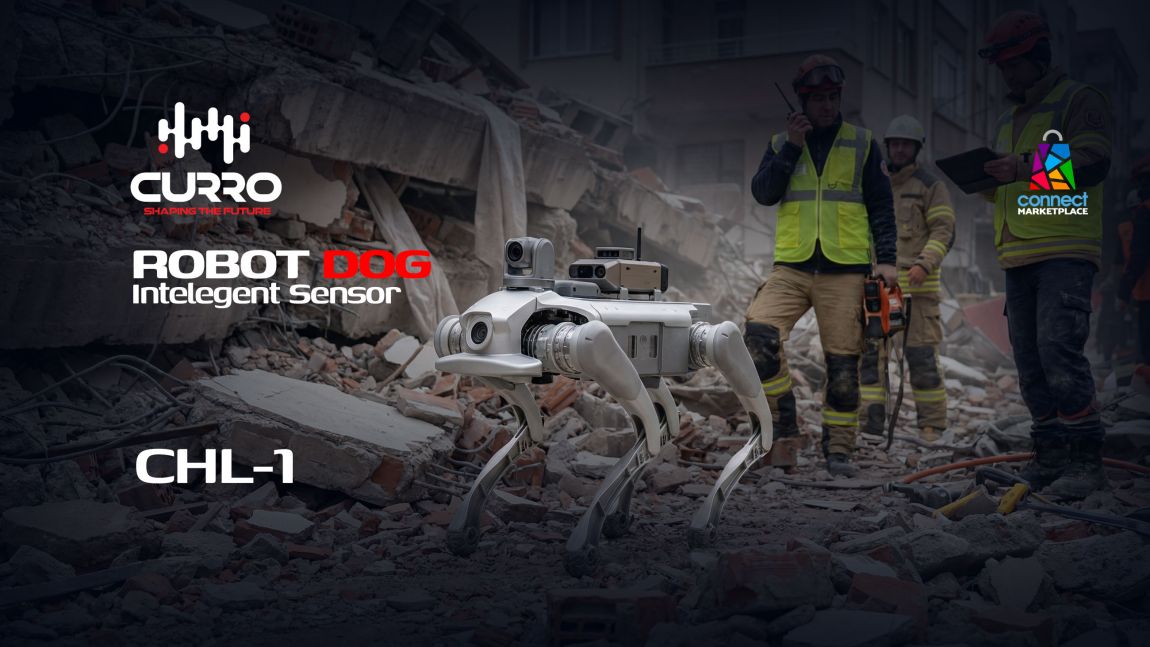
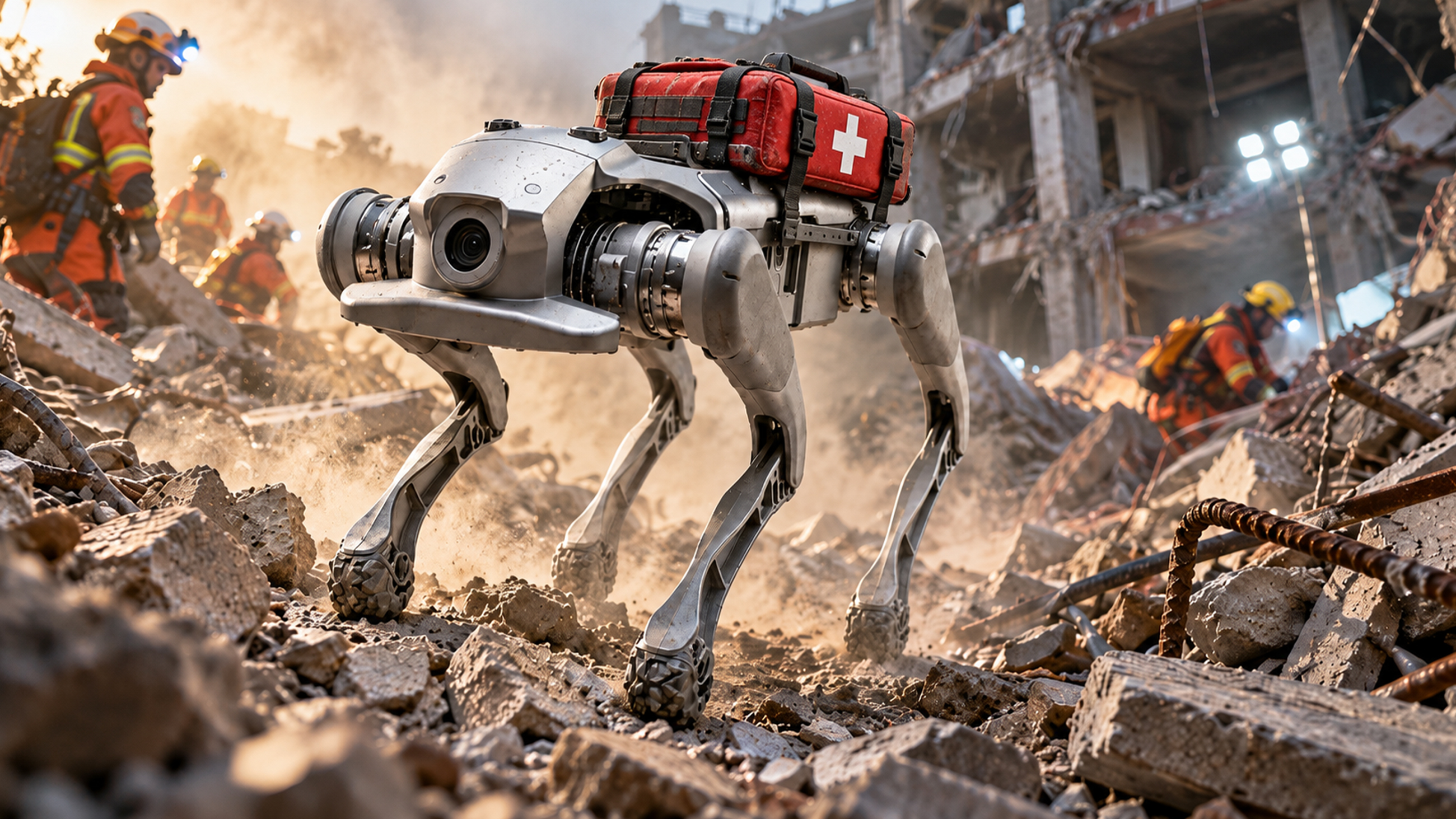
The Curro Robot Dog supports earthquake search and rescue operations by accessing dangerous environments, providing real-time situational awareness, and helping locate survivors while reducing risk to human responders. Its mobility and sensor capabilities enable effective operation in unstable disaster zones.
How the Curro Robot Dog Supports Earthquake Search and Rescue
ROBOTICS & AUTONOMOUS SYSTEMS / SEARCH & RESCUE
Curro Robot Dog: A New Ally in Earthquake Search and Rescue Operations
When earthquakes strike, every second matters. Collapsed buildings, unstable structures, and dangerous terrain create enormous challenges for emergency responders. The Curro Robot Dog represents a new approach to disaster response, combining advanced robotic mobility with intelligent sensing capabilities to help rescue teams explore hazardous environments while reducing risks to human life.
Earthquakes are among the most devastating natural disasters, often striking without warning and leaving entire communities facing damaged infrastructure, blocked access routes, and uncertain structural conditions. In the critical hours following a seismic event, search and rescue teams must make rapid decisions while operating under extreme physical and environmental pressure.
As robotics and autonomous technologies continue to advance, intelligent ground platforms are opening new possibilities for emergency response. The Curro Robot Dog demonstrates how four-legged robotic systems could support rescue missions by extending operational reach, improving situational awareness, and enabling remote observation in locations where direct human access may be dangerous.
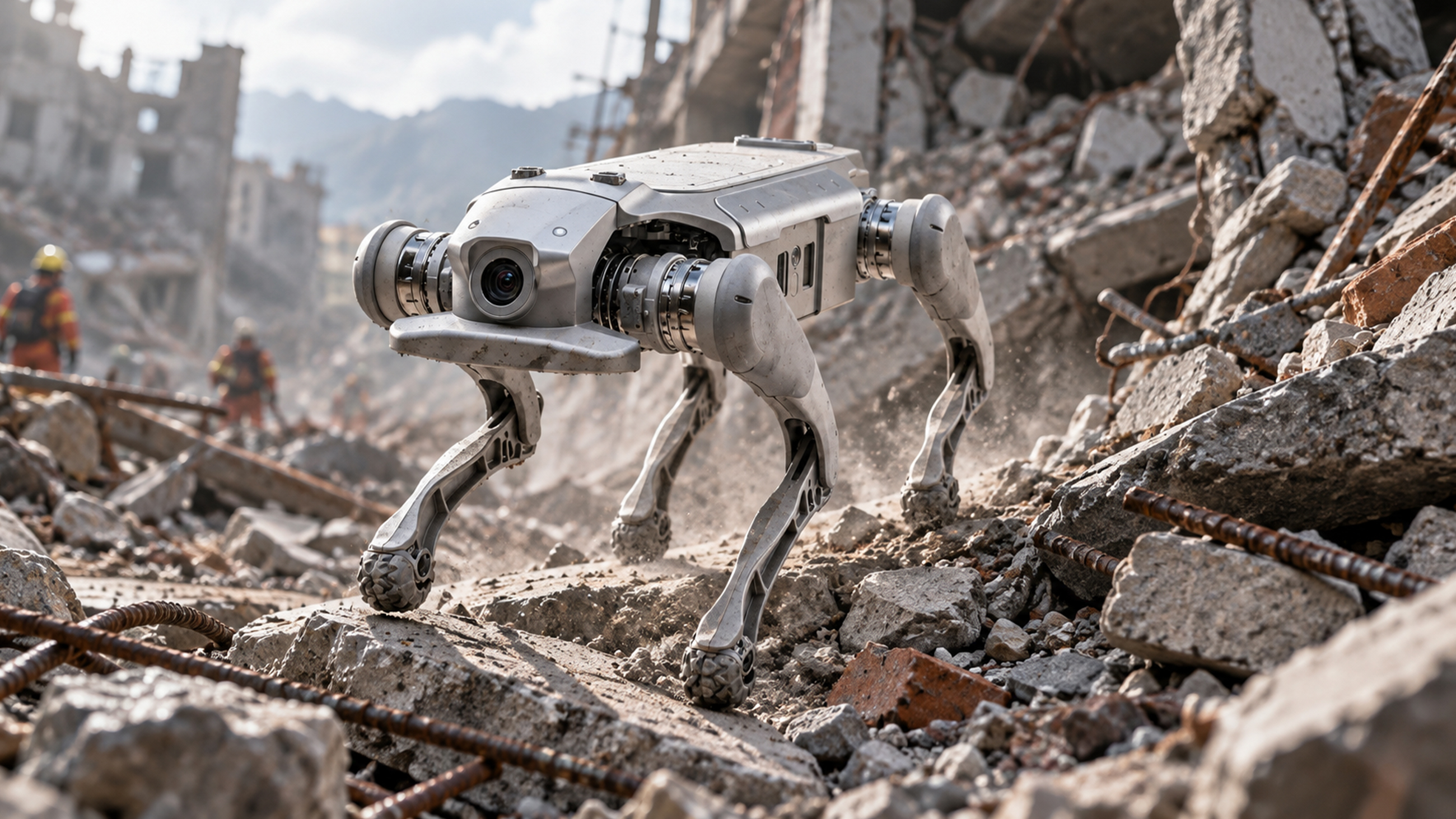
Curro Robot Dog — exploring the potential of intelligent quadruped robotics in earthquake rescue and emergency response operations.
01 / DISASTER RESPONSE CHALLENGES
The Challenges of Earthquake Search and Rescue Operations
Earthquake rescue operations are among the most demanding missions undertaken by emergency services. Within minutes, previously stable buildings can become dangerous environments filled with debris, damaged infrastructure, unstable surfaces, and hidden structural hazards.
Traditional rescue methods remain essential, but they are often constrained by physical and environmental limitations. Rubble piles can shift unexpectedly, narrow openings may prevent access, and aftershocks create additional risks for both trapped survivors and rescue personnel.
Heavy machinery can assist with removing debris, yet its use must be carefully coordinated to avoid destabilizing damaged structures. Manual searches require considerable physical effort, specialist equipment, and constant attention to changing conditions.
Time is one of the most critical factors. Survivors trapped beneath collapsed structures may require urgent medical assistance, while rescue teams must simultaneously identify safe access routes and assess the risks involved in reaching them.
Technologies that improve early assessment, provide reliable visual information, or reduce unnecessary exposure to unstable environments can become valuable additions to emergency response operations.
SEARCH & RESCUE PRIORITY
Faster situational awareness, safer access to hazardous environments, and better-informed rescue decisions can make a critical difference when every minute counts.
02 / QUADRUPED ROBOTICS
Why a Robot Dog? Mobility Designed for Complex Terrain
One of the defining advantages of quadruped robotic platforms is their ability to move across terrain that may be difficult for conventional wheeled or tracked equipment.
Using four independently controlled legs, robotic dogs can adapt their movement to changes in surface height, obstacles, and ground conditions. This type of locomotion offers considerable potential in earthquake-affected environments, where damaged flooring, scattered debris, and uneven surfaces can restrict movement.
The Curro Robot Dog brings this approach to intelligent ground mobility, providing a platform that can support remote exploration and observation across challenging environments.
Rather than requiring rescue personnel to enter every uncertain area immediately, a robotic platform may be deployed to conduct an initial inspection, helping teams understand the conditions before committing human resources.
Its four-legged design can also support movement through certain confined environments, although access remains dependent on the dimensions of the robot, available clearance, terrain stability, and surrounding obstacles.
By combining mobility with remote operation, quadruped robotics introduces additional flexibility into rescue planning and provides emergency teams with another way to approach complex operational challenges.
Four-legged robotic mobility offers new possibilities for navigating uneven and obstructed terrain.Remote robotic platforms can support preliminary assessment of areas that may be unsafe for human entry.
03 / SITUATIONAL AWARENESS
Rapid Assessment and Real-Time Environmental Observation
Before rescue teams can safely enter a damaged structure, they need reliable information about the surrounding environment. Visibility may be limited by darkness, dust, debris, or restricted access, making initial assessment particularly difficult.
Robotic platforms equipped with suitable visual sensors can provide remote observation capabilities, allowing operators to examine accessible areas without immediately exposing personnel to unknown conditions.
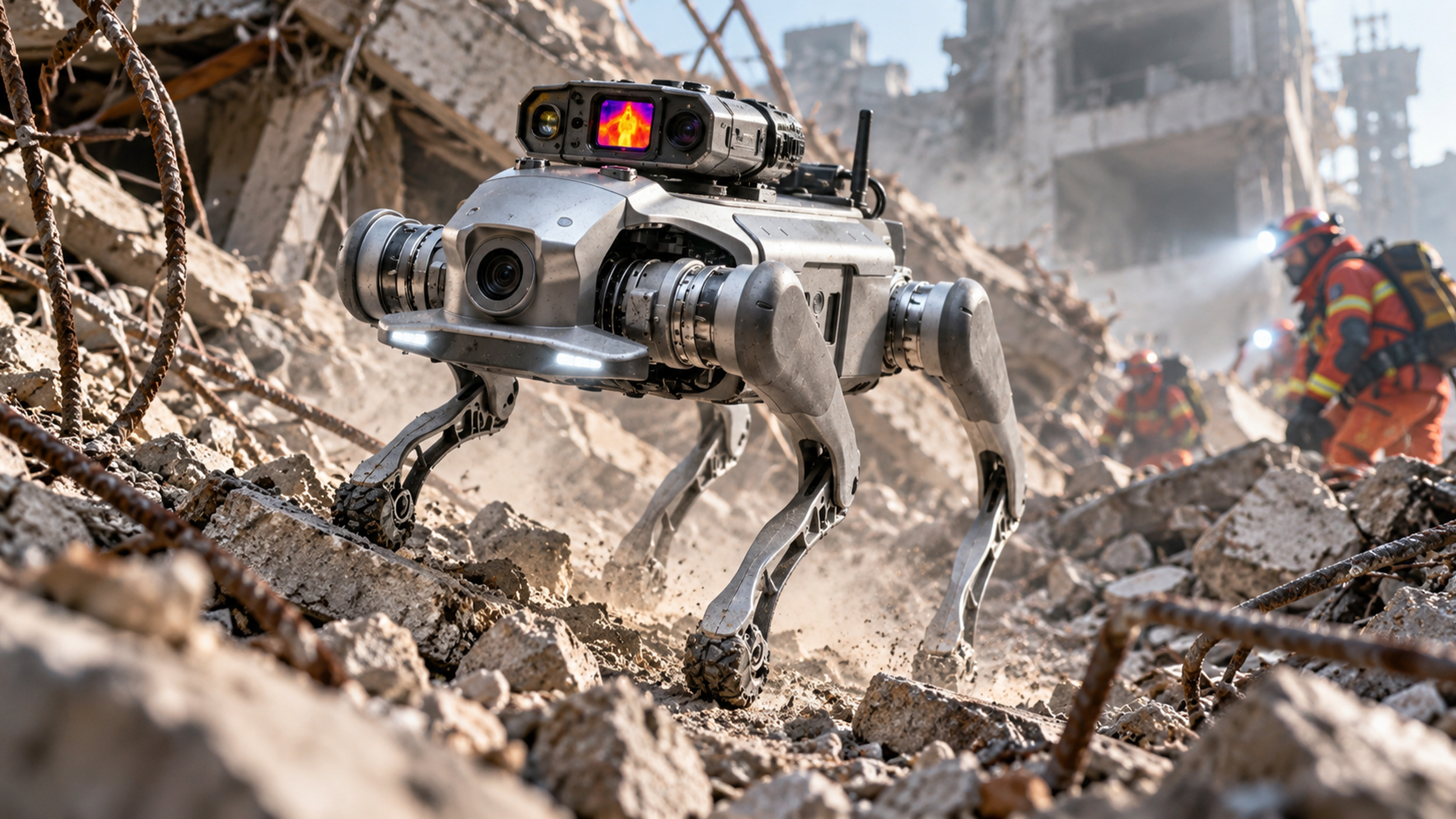
Depending on the selected equipment configuration, additional sensing technologies such as low-light cameras or thermal imaging may further support environmental assessment.
Thermal imaging can help identify visible temperature differences and potential heat signatures, although detecting people beneath dense rubble remains technically challenging and cannot be guaranteed by thermal sensing alone.
Information collected through robotic observation can help rescue coordinators evaluate possible access routes, recognize visible hazards, and identify locations requiring closer inspection.
When combined with other search methods, such as rescue dogs, specialist acoustic equipment, structural assessment, and human expertise, robotic sensing can contribute to a more comprehensive understanding of an affected area.
04 / HAZARDOUS ENVIRONMENTS
Accessing Dangerous and Difficult-to-Reach Locations
Collapsed buildings frequently create irregular passages, damaged stairways, partially obstructed corridors, and unstable surfaces. These environments can present serious risks to emergency personnel, especially when the structural condition of surrounding materials remains uncertain.
The Curro Robot Dog offers potential advantages in locations where its dimensions and mobility allow it to navigate obstacles while maintaining communication with a remote operator.
A robotic inspection can help provide visual information about damaged interiors, debris distribution, possible movement routes, and areas requiring additional investigation.
Such information may support decisions about where rescue personnel should enter, which routes should be avoided, and whether further specialist assessment is necessary.
However, robotic mobility does not eliminate the dangers associated with unstable structures. Loose debris, narrow openings, falling materials, and communication obstructions can also affect robotic systems.
For this reason, robotic exploration should be considered part of a coordinated rescue strategy rather than a replacement for established safety procedures and specialist judgment.
“
The greatest value of rescue robotics is not replacing human courage, but extending human capability into environments where every additional step carries risk.
05 / RESPONDER SAFETY
Reducing Risk to Human Search and Rescue Teams
Emergency responders routinely face dangerous conditions during earthquake recovery operations. Aftershocks, secondary collapses, damaged electrical systems, gas leaks, fires, and hazardous materials can create risks that are difficult to evaluate from a distance.
Robotic assistance offers an opportunity to reduce unnecessary human exposure during preliminary exploration and inspection.
For example, a remotely operated robotic platform may be used to observe the interior of a damaged building before personnel enter. Visual information gathered during this process can support hazard identification and help rescue coordinators determine the appropriate next steps.
Where suitable sensors are installed, additional environmental information may further contribute to operational awareness.
The objective is not to remove human decision-making from rescue operations, but to provide responders with additional information that can improve planning and support safer interventions.
By extending observation into hazardous areas, intelligent robotic platforms may help emergency teams allocate personnel more effectively and concentrate their efforts where direct human intervention is most urgently needed.
Intelligent robotic assistance can extend observation capabilities and support safer decision-making in complex disaster environments.
06 / COMMUNICATION & COORDINATION
Supporting Communication and Rescue Team Coordination
Communication becomes especially important during large-scale natural disasters, when infrastructure may be damaged, conventional networks overloaded, and rescue teams distributed across multiple operational areas.
Robotic platforms equipped with compatible communication systems can provide remote observation data to operators and, where supported, contribute information to broader incident management workflows.
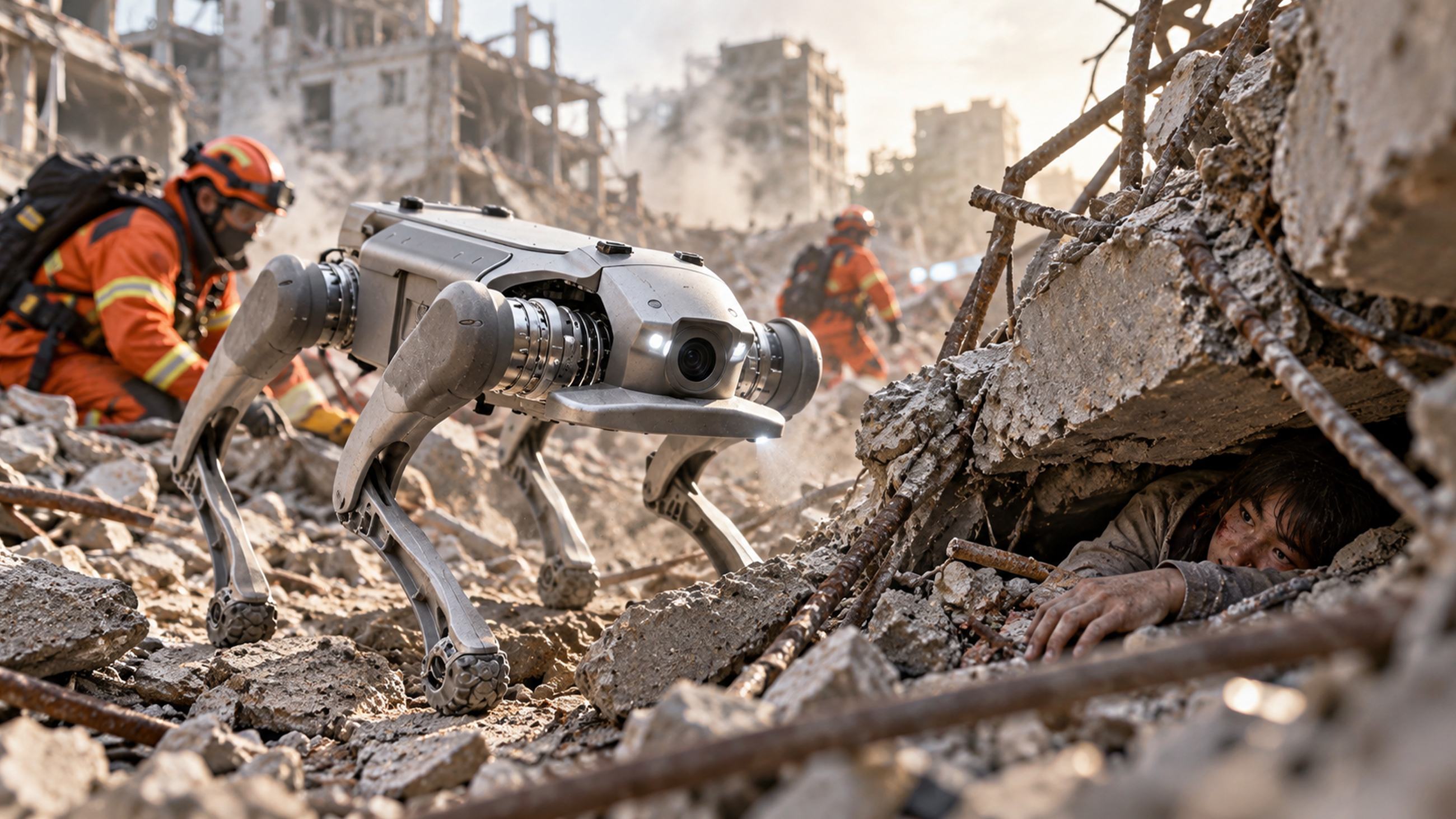
Depending on the installed equipment, audio communication capabilities may also create opportunities for limited interaction with people located in accessible but hazardous areas.
Two-way communication could allow responders to establish contact, gather information about a survivor's condition, and provide instructions or reassurance while an extraction plan is prepared.
For rescue coordinators, combining visual observations, environmental information, and reports from human teams can improve situational awareness across the affected area.
Reliable communication remains essential, particularly in reinforced structures, underground spaces, or locations where debris can obstruct wireless signals.
07 / OPERATIONAL RESILIENCE
Operating in Harsh and Unpredictable Conditions
Post-earthquake environments are rarely predictable. Dust, darkness, damaged surfaces, scattered debris, water, and changing structural conditions can create major obstacles for both personnel and equipment.
The adaptability of four-legged locomotion can offer advantages across certain uneven surfaces, allowing robotic platforms to adjust their movement as ground conditions change.
Unlike human responders, robotic systems do not experience physical fatigue. However, their effective operating time depends on available battery capacity, equipment configuration, communication reliability, and environmental conditions.
For extended operations, planned battery replacement, maintenance, and technical supervision remain important.
By integrating robotic platforms into organized response procedures, emergency teams can potentially extend observation coverage while maintaining appropriate operational controls.
APPLICATIONSearch & RescueRobotic assistance during earthquake and disaster response operations
MOBILITYQuadruped RoboticsFour-legged movement designed for challenging terrain
OPERATIONAL SUPPORTRemote ObservationSituational awareness and environmental assessment
PRIMARY OBJECTIVEResponder SafetyReducing unnecessary exposure to hazardous environments
08 / RESCUE WORKFLOW INTEGRATION
Integrating Robotic Systems into Emergency Response Operations
The Curro Robot Dog is not intended to replace professional rescuers. Its potential value lies in complementing existing emergency response capabilities and supporting teams with additional mobility and observation options.
Effective robotic integration requires clear operating procedures, trained personnel, reliable communication, and coordination with established search and rescue methods.
Information collected during robotic exploration can support the development of a more detailed operational picture when combined with site maps, structural assessments, visual documentation, and reports from rescue personnel.
This integrated approach can help incident commanders prioritize areas of interest, assess possible routes, and coordinate specialist resources more effectively.
Robotic platforms may also be particularly valuable during initial damage assessment, when the condition of infrastructure is uncertain and rapid information gathering is essential.
By incorporating intelligent ground robotics into established procedures, emergency organizations can explore new approaches to operational readiness while preserving the central role of trained human responders.
09 / TRAINING & PREPAREDNESS
Preparing Rescue Teams for Robotic Assistance
The effective use of advanced robotic technology begins long before an emergency occurs.
Training exercises and disaster simulations provide opportunities for emergency services to become familiar with robotic platforms, evaluate their practical capabilities, and establish procedures for safe deployment.
Exercises involving damaged-building simulations, obstacle courses, restricted-access environments, and communication challenges can help teams understand both the advantages and limitations of robotic systems.
Regular training also encourages closer coordination between robot operators, technical specialists, rescue personnel, and incident commanders.
When robotic tools are introduced through structured preparation rather than improvised deployment, emergency organizations are better positioned to use them effectively under real operational pressure.
10 / FUTURE OF RESCUE ROBOTICS
The Future of Intelligent Robotic Assistance in Disaster Response
As robotics, artificial intelligence, sensor technologies, and autonomous navigation continue to develop, intelligent ground platforms are expected to become increasingly capable of supporting complex emergency operations.
Potential future developments include improved environmental mapping, more sophisticated obstacle recognition, enhanced sensor integration, and greater coordination between robotic platforms and human response teams.
Integration with unmanned aerial systems may also create opportunities to combine aerial observation with ground-level inspection, providing a more comprehensive understanding of disaster-affected environments.
For emergency services, these technological developments could contribute to faster assessment, more informed resource allocation, and improved operational coordination.
The Curro Robot Dog represents an example of how intelligent mobility and adaptable robotic platforms can support this direction of development.
In earthquake response, where uncertainty, difficult terrain, and time pressure are constant challenges, technologies that extend human capabilities have the potential to contribute meaningfully to safer and more effective rescue operations.
The future of disaster response will continue to depend on human expertise, courage, and cooperation. Intelligent robotic systems can provide valuable support by helping responders see further, assess risks earlier, and approach challenging environments with greater awareness.
CURRO successfully concluded its participation at ADEX 2026 in Baku, Azerbaijan, showcasing advanced intelligent security and low-altitude detection technologies. The exhibition brought together international defense professionals, industry leaders, and potential partners, creating valuable opportunities for technical exchange, strategic cooperation, and continued expansion across the South Caucasus, Central Asia, and global security markets.
Curro successfully concluded its participation at the Abu Dhabi International Unmanned Systems Exhibition, engaging with international partners from the Middle East and Southeast Asia and securing multiple cooperation opportunities for future global expansion.
Curro presented its flagship unmanned systems at the 2026 Abu Dhabi International Unmanned Systems Exhibition, drawing strong international attention with live demonstrations of its drone detection and intelligent robot dog technologies and strengthening cooperation with global partners.