
+385 (1) 35 35 200Mon-Fr 9a.m.-6p.m.
Detection, Tracking & Neutralization Technologies: Building an End-to-End Counter-Drone Defense
Detection, tracking, and neutralization technologies form the foundation of modern counter-drone defense. By combining early warning, accurate tracking, and controlled mitigation, these systems enable effective protection of low-altitude airspace across complex security environments.
Detection, Tracking, and Neutralization in Modern Counter-Drone Systems
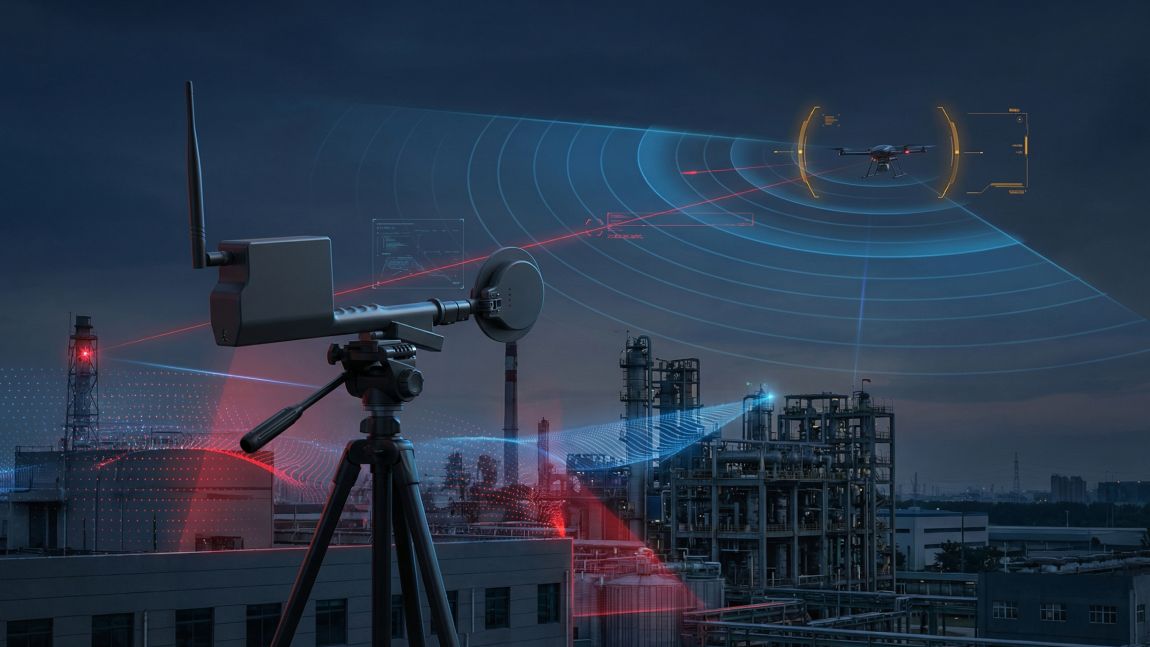
As drones become more capable and more accessible, the challenge for security teams is no longer simply spotting an unmanned aircraft in the sky. The real challenge is building a reliable, repeatable process that can detect an intrusion early, track it accurately, identify intent, and neutralize the threat in a controlled way—often in complex environments where safety, continuity of operations, and regulatory constraints matter just as much as speed.
Detection, tracking, and neutralization technologies form the backbone of modern counter-drone systems. When combined into a layered architecture, they provide a practical and scalable approach to protecting low-altitude airspace over critical infrastructure, industrial sites, government facilities, logistics hubs, airports, and high-risk events.
Why Detection Comes First
Neutralization is only as effective as the awareness that precedes it. Low-altitude drones are small, fast, and can appear with minimal warning. In many incidents, the damage—whether operational disruption, surveillance, or delivery of contraband—happens quickly, leaving little time to respond. Early detection extends decision time and reduces the risk of reactive, high-consequence actions.
Effective detection also reduces false alarms. A system that triggers repeatedly on birds, weather, or unrelated radio activity creates fatigue and undermines confidence. Modern counter-drone security requires detection that is not only sensitive, but also selective and explainable.
Core Detection Methods
Counter-drone detection typically relies on a layered sensor strategy. No single sensor is perfect in all conditions, which is why high-reliability deployments often combine multiple approaches:
- RF (Radio Frequency) detection: Identifies drone-related control links, telemetry, or video transmission activity. RF sensing can provide early warning, direction finding, and clues about the drone type and operator proximity.
- Radar-based detection: Helps locate aerial objects at low altitude and track them over distance. Specialized approaches (including harmonic radar concepts) can improve detection of small targets in challenging environments.
- Electro-optical / infrared (EO/IR) confirmation: Visual and thermal sensors help validate a contact, support identification, and provide evidence-grade recordings where required.
- Acoustic sensing: Useful in select environments, especially where other sensing is obstructed, though typically more limited by range and background noise.
The strongest systems correlate data across sensors to improve confidence, reduce false positives, and produce actionable alerts rather than raw detections.
Tracking: Turning a Detection Into a Decision
Detection answers “something is there.” Tracking answers “where is it going, how fast is it moving, and what is it doing right now?” In real security operations, tracking is what enables controlled responses and safe escalation.
Accurate tracking supports practical outcomes:
- Defining risk zones: Determining whether the drone is approaching a restricted area, hovering near sensitive assets, or departing.
- Protecting people and operations: Establishing safety perimeters and preventing unnecessary shutdowns.
- Supporting lawful response: Documenting behavior patterns and enabling measured, policy-aligned decision-making.
- Enabling continuity: Maintaining site operations while responding proportionally to the threat.
In modern deployments, tracking is often integrated into a command-and-control layer that displays the air picture in real time, logs events, and routes alerts to the appropriate response teams.
Identification and Threat Assessment
Not every drone is hostile. Some incursions are accidental, negligent, or the result of unaware hobbyist activity. Others are deliberate. Identification helps determine whether the object is a consumer quadcopter, an FPV platform, or a customized system—and whether it is behaving in a way that indicates surveillance, disruption, or payload delivery.
Threat assessment typically considers:
- Flight behavior: Loitering, repeated passes, direct approach to sensitive assets, unusual altitude changes.
- Signal characteristics: Frequency patterns, protocol indicators, presence or absence of common control links.
- Context: Location sensitivity, current events, known risks, and site operating status.
This step matters because it determines the response approach. In many environments, the goal is not “maximum force,” but “maximum control with minimum collateral impact.”
Neutralization: Controlled Mitigation Over Unpredictable Outcomes
Neutralization is often described as “stopping the drone,” but in professional settings the objective is broader: to remove the drone’s ability to complete its mission, while minimizing unintended consequences to people, infrastructure, and surrounding communications.
Modern mitigation approaches typically emphasize non-destructive and controlled outcomes where feasible—especially in urban environments and near critical infrastructure.
Electronic and Signal-Based Mitigation
Electronic mitigation targets the signals drones rely on, such as command-and-control links or navigation dependencies. When designed and deployed appropriately under applicable laws and operational policies, signal-based mitigation can force mission failure through controlled disruption, reducing the need for physical engagement.
Because the electromagnetic environment is shared, professional systems prioritize:
- Precision: Targeted intervention rather than broad interference.
- Defined zones: Clear operational boundaries to limit spillover effects.
- Operator oversight: Rules-based control, logging, and escalation pathways.
Non-Destructive Capture and Recovery
In some scenarios, the preferred outcome is not just stopping the drone, but recovering it for forensic analysis—supporting investigations, attribution, and future prevention. Recovery-focused tools can be valuable when evidence preservation matters, or when it is safer to avoid destructive outcomes near people and infrastructure.
Layered Defense as a Security Standard
No single technology solves the counter-drone problem. The strongest architectures are layered and integrated:
- Layer 1: Early warning (RF and/or radar) to increase decision time.
- Layer 2: Tracking and confirmation (sensor fusion + EO/IR) to reduce false positives and validate intent.
- Layer 3: Controlled mitigation (signal-based neutralization and/or recovery) aligned with site policy and regulations.
- Layer 4: Post-incident analysis (logging, reporting, evidence handling) to strengthen future readiness.
This framework supports both fixed installations (airports, plants, bases) and mobile deployments (events, temporary sites, field operations) while maintaining consistent operational discipline.
Operational Readiness and Responsible Use
Counter-drone technology is most effective when paired with clear procedures. Security teams benefit from defined escalation rules, training, maintenance checks, and coordination with stakeholders—especially where airspace regulations, privacy concerns, and safety obligations apply.
When used responsibly, detection, tracking, and neutralization technologies provide more than immediate protection. They deliver confidence, continuity, and a stronger security posture in a world where low-altitude threats can appear without warning.
Looking Ahead
Drones will continue to evolve—smaller profiles, smarter autonomy, more resilient communications, and more complex behaviors. That makes detection, tracking, and controlled neutralization not a one-time purchase, but an ongoing capability. Organizations that invest in layered awareness and measured response will be best positioned to protect people, operations, and critical assets in the modern airspace.