

+385 (1) 35 35 200Mon-Fr 9a.m.-6p.m.
Curro Robot Dog: A New Ally in Earthquake Search and Rescue Operations
The Curro Robot Dog supports earthquake search and rescue operations by accessing dangerous environments, providing real-time situational awareness, and helping locate survivors while reducing risk to human responders. Its mobility and sensor capabilities enable effective operation in unstable disaster zones.
How the Curro Robot Dog Supports Earthquake Search and Rescue
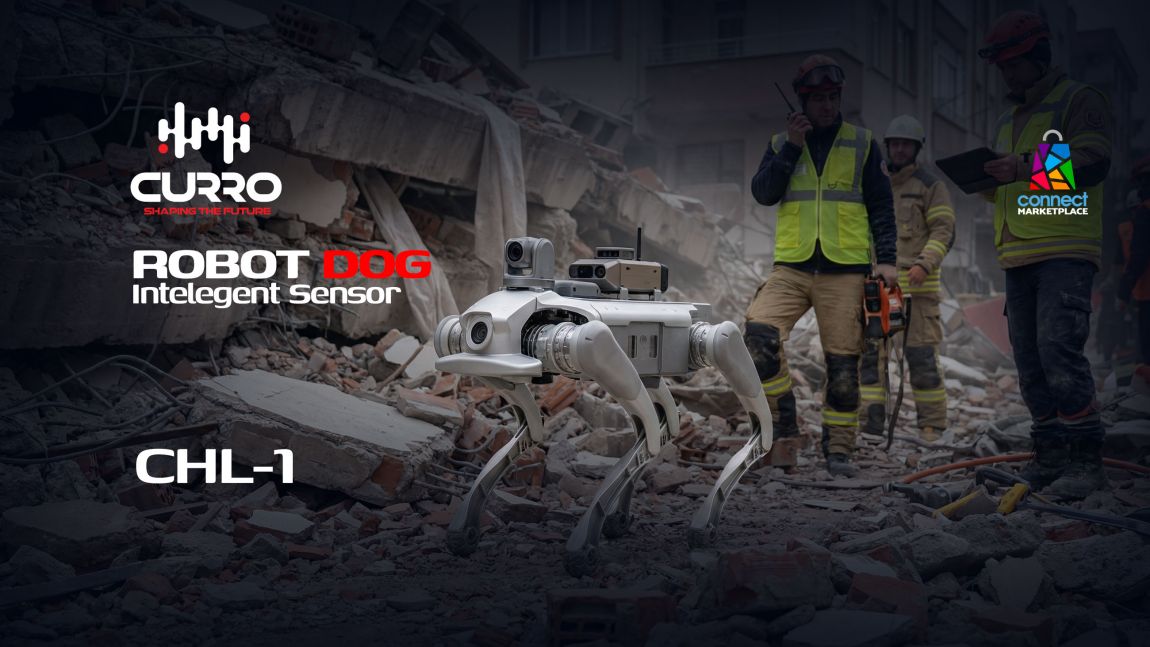
Earthquakes are among the most devastating natural disasters, striking without warning and leaving behind collapsed buildings, unstable terrain, and limited access to survivors. In the critical hours following a seismic event, search and rescue teams face extreme challenges: damaged infrastructure, unsafe environments, time pressure, and the constant risk to human responders.
In this context, robotic technologies are no longer experimental concepts—they are becoming essential tools. The Curro Robot Dog represents a new generation of intelligent, mobile platforms designed to support rescue teams by extending their reach, improving situational awareness, and reducing risk to human life.
The Challenges of Earthquake Rescue Operations
After a major earthquake, traditional rescue methods are often constrained by physical and environmental limitations. Rubble piles are unstable, narrow voids are inaccessible, and aftershocks can endanger both victims and rescuers. Heavy machinery may cause further collapse, while manual searches are slow and exhausting.
Time is the most critical factor. Survivors trapped under debris rely on rapid detection, accurate location, and safe access. Any technology that can accelerate these processes while minimizing danger has the potential to save lives.
Why a Robot Dog?
The Curro Robot Dog is designed to move where wheeled or tracked vehicles cannot. Its four-legged locomotion allows it to traverse uneven terrain, climb over debris, descend into partially collapsed structures, and maintain stability on unstable surfaces.
Unlike human rescuers, the robot dog can be deployed immediately into high-risk zones without concern for fatigue, air quality, heat, or structural instability. This makes it an ideal first-entry platform in post-earthquake environments.
Rapid Assessment and Situational Awareness
One of the most valuable contributions of the Curro Robot Dog is its ability to provide real-time situational awareness. Equipped with visual cameras, low-light sensors, and optional thermal imaging, the robot can survey affected areas quickly and transmit live data to command centers.
This capability allows rescue coordinators to assess damage, identify accessible paths, and prioritize response areas without sending personnel into unknown conditions. Thermal sensors can help detect body heat beneath rubble, supporting early identification of potential survivors.
Accessing Confined and Dangerous Spaces
Earthquake debris often creates small voids and narrow passages where survivors may be trapped. These spaces are frequently inaccessible or extremely dangerous for human rescuers. The Curro Robot Dog’s compact form and agile movement enable it to enter confined environments safely.
By navigating through rubble and transmitting visual and audio data, the robot can confirm the presence of survivors, assess their condition, and guide rescue teams toward the safest extraction approach.
Reducing Risk to Human Rescuers
Search and rescue operations are among the most hazardous missions emergency teams undertake. Aftershocks, secondary collapses, gas leaks, and fires pose constant threats. Deploying robotic systems like the Curro Robot Dog significantly reduces exposure to these risks.
The robot can be sent ahead to inspect structurally compromised buildings, detect hazards, and evaluate stability before human entry. This not only protects responders but also improves operational efficiency by preventing unnecessary delays and accidents.
Supporting Communication and Coordination
In disaster scenarios, communication infrastructure is often damaged or overloaded. The Curro Robot Dog can act as a mobile observation and communication node, relaying data from hard-to-reach locations back to response teams.
Audio sensors and speakers can allow two-way communication with trapped survivors, providing reassurance, gathering critical information, and maintaining psychological support until rescue is possible.
Operation in Harsh and Unpredictable Conditions
Earthquake environments are unpredictable. Dust, darkness, water, uneven ground, and debris are common obstacles. The Curro Robot Dog is built to operate reliably under such conditions, maintaining balance and functionality where conventional equipment may fail.
Its ability to operate for extended periods without rest ensures continuous monitoring and exploration, even when human teams need to rotate or withdraw.
Integration with Rescue Workflows
The Curro Robot Dog is not intended to replace human rescuers, but to enhance their capabilities. When integrated into standard search and rescue workflows, it becomes a force multiplier—extending vision, reach, and decision-making speed.
Data collected by the robot can be combined with maps, building plans, and sensor information to create a more accurate operational picture. This supports better planning, faster interventions, and more effective use of limited resources.
Training and Preparedness
Beyond real-world deployments, the Curro Robot Dog can play a role in training and preparedness. Emergency services can use it in simulation exercises to develop protocols, test response strategies, and improve coordination between human and robotic assets.
Regular training ensures that when a real earthquake occurs, teams are ready to deploy robotic support seamlessly and effectively.
The Future of Robotic Rescue Assistance
As robotics, artificial intelligence, and sensor technologies continue to evolve, platforms like the Curro Robot Dog will become increasingly capable. Future developments may include enhanced autonomy, advanced mapping, improved survivor detection, and coordinated operation with other unmanned systems.
In earthquake response, where every minute matters and conditions are constantly changing, such advancements will play a critical role in improving survival rates and protecting those who risk their lives to save others.
The Curro Robot Dog represents a powerful step forward in disaster response technology. By combining mobility, sensing, and resilience, it offers search and rescue teams a new way to operate faster, safer, and more effectively in the aftermath of earthquakes.
In a world where natural disasters are becoming more frequent and more severe, intelligent robotic partners are no longer optional innovations—they are essential tools for saving lives.
Na naslovnicuSljedeća objava