
+385 (1) 35 35 200Mon-Fr 9a.m.-6p.m.
Micro UAV Systems: Compact Intelligence for Modern Surveillance and Operations
This micro UAV system delivers advanced aerial intelligence in an ultra-compact form, combining agile flight, multi-sensor payloads, and secure communications for surveillance, inspection, and situational awareness in constrained, high-risk, and operationally complex environments.
Micro UAV Systems for Modern Surveillance and Operations
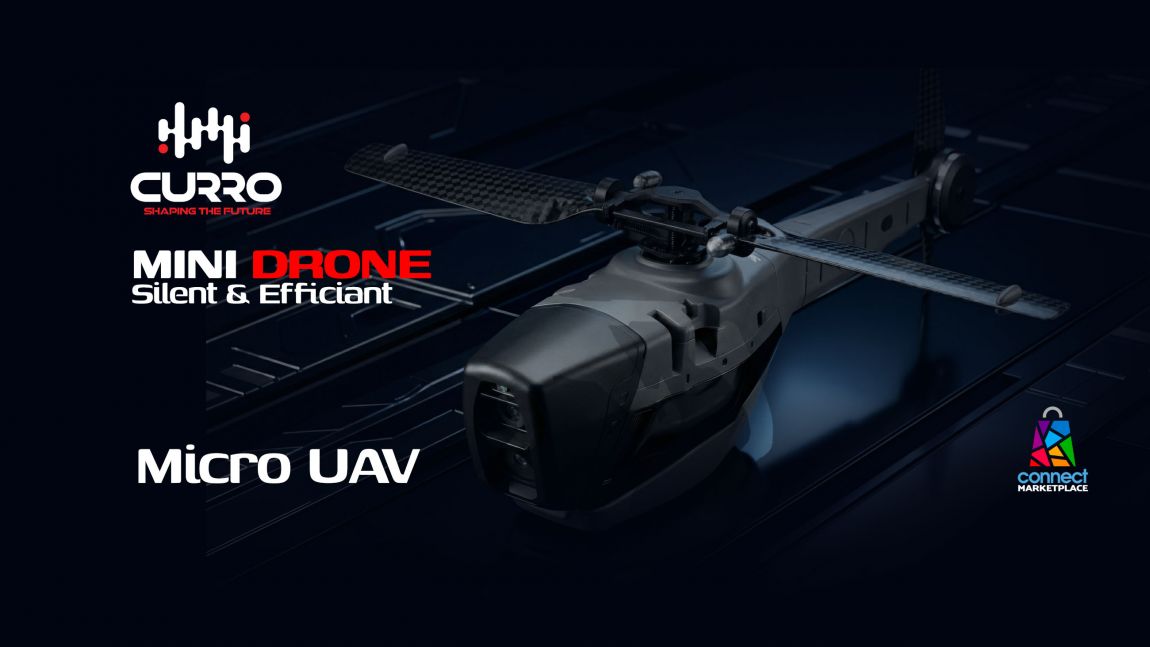
Micro unmanned aerial vehicles (UAVs) are rapidly redefining how surveillance, reconnaissance, and situational awareness are conducted in modern operational environments. As security challenges become more complex and spaces more constrained, the demand for lightweight, agile, and intelligent aerial platforms has grown significantly. Micro drones represent a new class of tools designed to operate where traditional UAVs cannot—quietly, precisely, and with minimal logistical footprint.
The micro UAV system shown here exemplifies this shift. Compact in size yet rich in capability, it demonstrates how advanced sensing, communication, and flight control technologies can be integrated into a platform small enough to fit in the palm of a hand, while still delivering meaningful operational value.
Designed for Constrained and High-Risk Environments
One of the defining advantages of micro UAVs is their ability to operate in environments that are inaccessible or unsafe for larger drones and human operators. With a length and rotor diameter of approximately 150 mm and a takeoff weight of around 60 grams, this micro drone is engineered for close-quarters operation and discreet deployment :contentReference[oaicite:0]{index=0}.
Such a form factor allows it to navigate narrow corridors, damaged structures, urban interiors, industrial facilities, and other confined spaces where situational awareness is critical but access is limited. In security, law enforcement, search and rescue, and inspection scenarios, this capability can dramatically reduce response time and operational risk.
Flight Performance That Defies Its Size
Despite its compact dimensions, the micro UAV offers impressive flight performance. An endurance of 25 minutes or more in no-wind conditions enables extended observation and reconnaissance missions without frequent battery changes. For operators, this means more time gathering information and less time managing equipment.
The drone’s maximum air-to-ground speed of 12.5 meters per second provides rapid repositioning when required, while its wind resistance rating of Level 4 (up to 8 m/s) ensures stable operation in moderately challenging outdoor conditions :contentReference[oaicite:1]{index=1}. These characteristics make the platform suitable for both indoor and outdoor missions, even when environmental conditions are less than ideal.
Flexible Flight Modes for Indoor and Outdoor Operations
Operational flexibility is a core requirement for modern micro UAVs. This system supports multiple flight modes tailored to different environments. Outdoors, it utilizes GNSS positioning and waypoint navigation, enabling preplanned routes, automated patrols, and repeatable missions with minimal operator input.
Indoors, where satellite navigation is unavailable, the drone switches to visual positioning and fixed-point hovering. This allows it to maintain stability and precise positioning inside buildings, tunnels, warehouses, or underground structures. The ability to seamlessly transition between indoor and outdoor flight significantly expands the range of potential applications.
Multi-Sensor Payload for Comprehensive Situational Awareness
Sensor capability is where micro UAVs deliver the greatest impact. This platform integrates multiple cameras to provide a layered view of the environment. A forward-facing optical camera delivers 1280×720 video at 30 frames per second, offering clear visual reconnaissance and real-time situational awareness.
A downward-facing optical camera supports navigation, positioning, and inspection tasks, while the integrated thermal imaging camera—operating at 256×192 resolution—enables detection of heat signatures :contentReference[oaicite:2]{index=2}. Thermal capability is particularly valuable in low-light conditions, smoke-filled environments, or search and rescue scenarios where identifying human presence quickly can be life-saving.
The combination of visual and thermal sensing transforms the micro UAV from a simple observation tool into a versatile intelligence platform capable of supporting decision-making in dynamic environments.
Secure and Adaptive Communications
Reliable communication is essential for any unmanned system, especially one operating at close range and potentially in contested electromagnetic environments. This micro UAV supports customizable transmission frequencies across a wide 400–5000 MHz range, allowing adaptation to different regulatory frameworks and operational requirements.
Advanced features such as frequency hopping and dynamically adjustable transmission power enhance link resilience and reduce susceptibility to interference. Under line-of-sight conditions, the wireless transmission range reaches up to 2.5 kilometers, providing ample operational reach for a platform of this size :contentReference[oaicite:3]{index=3}.
To protect sensitive data, the system employs AES encryption, ensuring that video feeds and control signals remain secure during transmission. This level of communication security is critical for professional and institutional users operating in sensitive contexts.
Applications Across Security, Safety, and Inspection
The versatility of micro UAV systems enables a wide range of applications. In security and law enforcement, they can be used for building clearance, perimeter checks, and rapid reconnaissance without exposing personnel to unnecessary risk. Their small size and low acoustic signature make them well suited for discreet observation.
In search and rescue operations, micro drones can enter collapsed structures, assess conditions, and locate survivors using thermal imaging, all while maintaining a safe distance for human responders. Industrial and infrastructure inspection teams can deploy micro UAVs to examine confined spaces, ducts, or machinery where manual inspection would be hazardous or impractical.
Even in training and preparedness scenarios, micro UAVs provide valuable opportunities to simulate real-world operations and develop protocols for unmanned system integration.
Operating Reliability in Challenging Conditions
Designed to function across a broad temperature range from -20°C to 45°C, the micro UAV is built for deployment in diverse climates and environments :contentReference[oaicite:4]{index=4}. This robustness ensures consistent performance whether operating in cold storage facilities, winter conditions, or hot industrial zones.
Reliability at this scale is particularly important, as micro UAVs are often deployed as first-entry or exploratory tools. Operators must be able to trust the platform to perform as expected when conditions are uncertain.
The Role of Micro UAVs in Future Operations
As unmanned systems continue to evolve, micro UAVs are expected to play an increasingly central role in layered operational architectures. Their ability to complement larger drones, ground robots, and human teams makes them valuable force multipliers rather than standalone solutions.
Future developments may further enhance autonomy, onboard processing, and sensor fusion, enabling micro UAVs to operate with greater independence and intelligence. Even today, systems like this demonstrate that size is no longer a limitation when it comes to capability.
The micro UAV system represents a powerful example of how modern engineering can deliver advanced intelligence, mobility, and security in an ultra-compact form. By combining agile flight, multi-sensor payloads, secure communications, and flexible operation modes, it offers a practical solution for surveillance, inspection, and situational awareness in environments where traditional tools fall short.
In an era where information, speed, and safety define operational success, micro UAVs are no longer niche devices—they are essential assets shaping the future of unmanned operations.